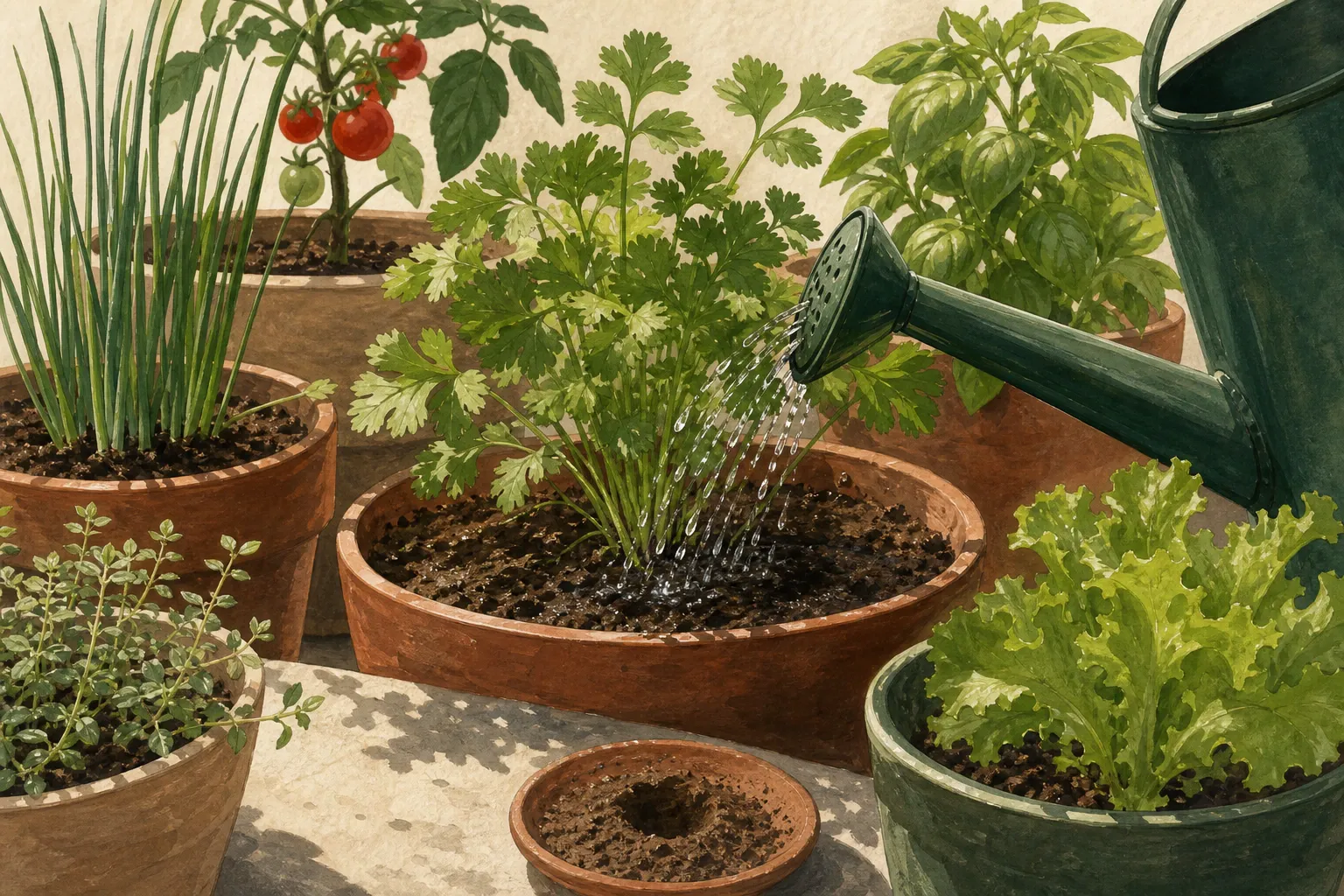
A national calendar cannot know today’s demand
Heat, dry wind, humidity, rain, crop size, root occupancy, container material and growing mix change water use. Adjacent days and nearby gardens can require different checks.
Look below the surface
Compare moisture below the top layer, safe container weight, recent weather, drainage and plant posture. A dry crust can cover moisture, while a wet surface can hide saturated roots.
Wet the occupied root zone
Apply water slowly enough to enter the mix and spread through the rooted volume. Stop if it runs across a path, toward a building detail or through a blocked outlet.
Follow the current local rule
Check the municipality, water utility, province, territory or community-garden manager when restrictions are possible. A broad crop guide never overrides an active restriction or boil-water advisory.
Sources, scope and limits
Sources support the stated context. They do not turn a broad guide into individualized advice or transfer rights to reproduce the original material.
Canada English home food garden editorial synthesis — version 1
Global Garden Planner
Original eight-profile model, planting bands and en-CA corpus. It remains an editorial draft until independent Canadian agronomic review is recorded.
How to water outdoor containers
Gardening at USask, University of Saskatchewan
Supports observing weather, container properties and drainage instead of imposing a fixed watering interval or volume.
Canadian Climate Normals 1991–2020
Environment and Climate Change Canada
Supports distinguishing climate averages from a current forecast and recognizing large local variation. The package does not ingest ECCC data or derive month bands from station values.