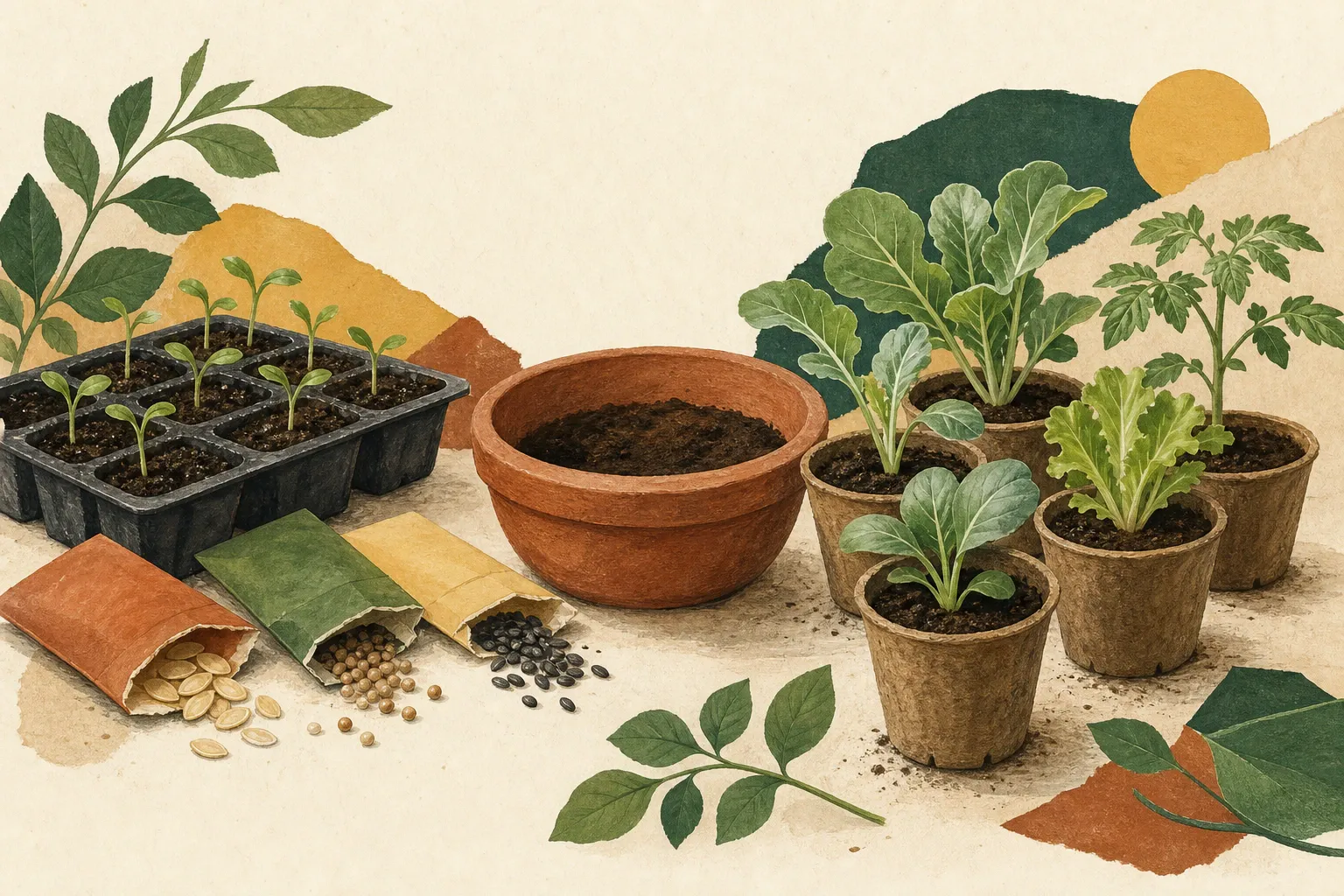
Use seed when direct sowing protects the root
Carrots, radishes and several legumes are often simpler where they will finish. The packet remains the primary instruction for cultivar depth, spacing, treatment and maturity information.
Use transplants to save early time, not to bypass climate
A sturdy transplant can shorten indoor propagation, but it still needs suitable frost risk, soil warmth, direct light and enough remaining maturity time. Avoid root-bound or unidentified material.
Check origin and destination requirements
CFIA requirements can vary by seed, plant, soil, origin and destination, with additional provincial or territorial restrictions. Check current official tools before buying across a border.
Harden off gradually
Increase exposure to outdoor light, wind and temperature in controlled steps. Return plants to safety when conditions exceed the plan instead of treating one mild day as proof of readiness.
Sources, scope and limits
Sources support the stated context. They do not turn a broad guide into individualized advice or transfer rights to reproduce the original material.
Canada English home food garden editorial synthesis — version 1
Global Garden Planner
Original eight-profile model, planting bands and en-CA corpus. It remains an editorial draft until independent Canadian agronomic review is recorded.
Importing small packet seed into Canada
Canadian Food Inspection Agency
Supports checking current seed and plant-health requirements before importing. Rules can differ by material, origin, destination and later updates.
Determining planting dates
Gardening at USask, University of Saskatchewan
Supports separating frost-free period, soil warmth, germination and cultivar maturity. It is prairie-oriented and does not supply the national calendar model.