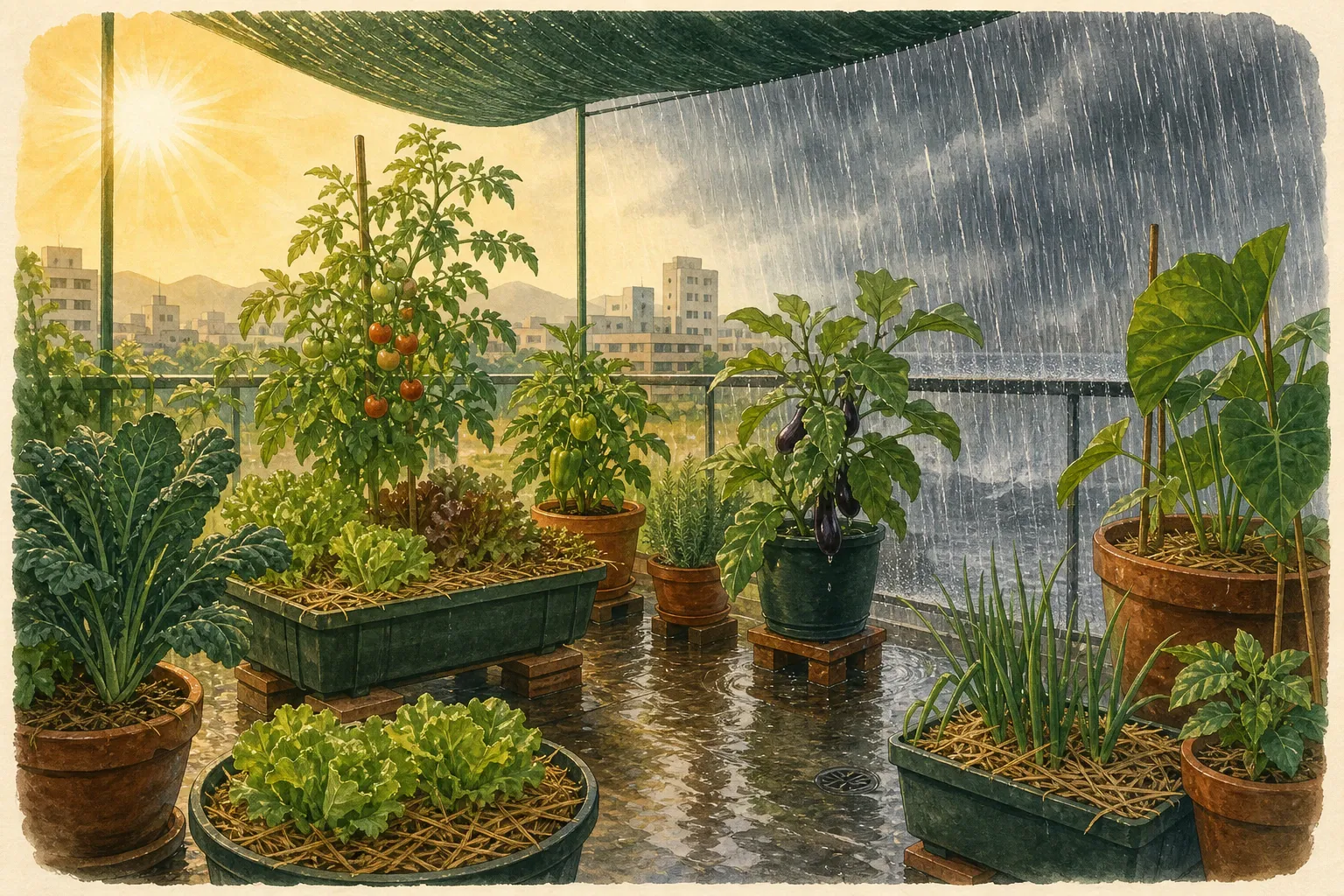
Use current official information
The package profile describes broad climate context only. Check current ECCC and local emergency information before moving containers, adding shade or changing support.
Reduce heat and drought stress without creating danger
Check small dark containers, reflected walls and enclosed glazing first. Temporary shade must remain secure, ventilated and clear of exits, utilities and neighbouring property.
Give intense rain somewhere to go
Clear outlets, remove standing saucer water where safe and inspect whether the root zone is saturated before watering again. Never divert runoff into a building or shared hazard.
Lower wind exposure safely
Move only loads that can be handled safely. Lower unstable canes and loose covers before conditions worsen, and never work at height or near overhead lines during strong wind.
Sources, scope and limits
Sources support the stated context. They do not turn a broad guide into individualized advice or transfer rights to reproduce the original material.
Canada English home food garden editorial synthesis — version 1
Global Garden Planner
Original eight-profile model, planting bands and en-CA corpus. It remains an editorial draft until independent Canadian agronomic review is recorded.
Canadian Climate Normals 1991–2020
Environment and Climate Change Canada
Supports distinguishing climate averages from a current forecast and recognizing large local variation. The package does not ingest ECCC data or derive month bands from station values.
How to water outdoor containers
Gardening at USask, University of Saskatchewan
Supports observing weather, container properties and drainage instead of imposing a fixed watering interval or volume.