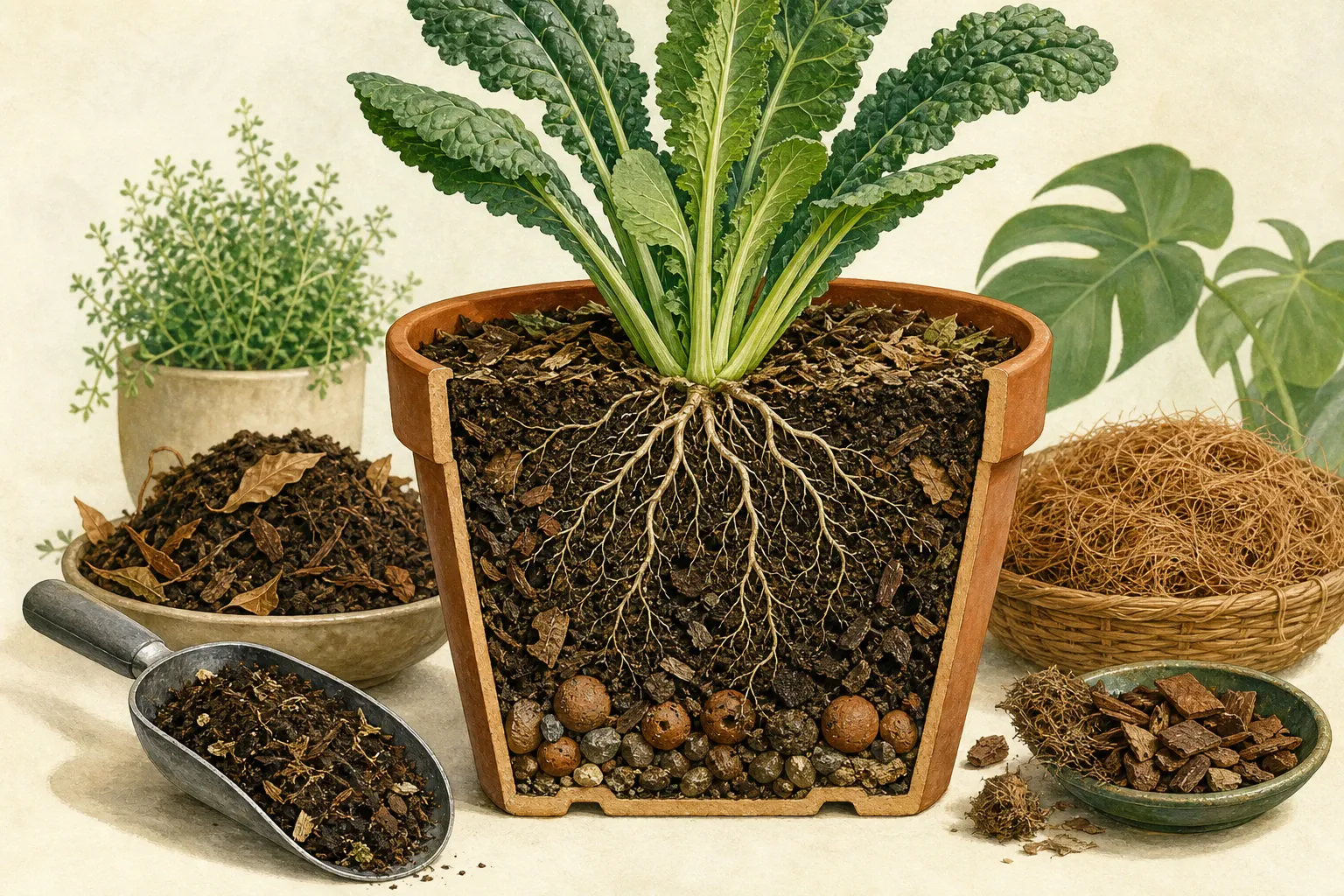
A container needs a purpose-made root environment
Container material must hold useful moisture while preserving air and letting excess water leave. Garden soil can compact, become extremely heavy and drain unpredictably in a pot.
Choose a clearly labelled growing mix suited to food crops and the intended use; do not infer safety from colour or texture.
Protect structure and headspace
Fill without crushing the material. Water to settle it naturally and keep a watering lip so water can enter rather than immediately running over the edge.
Test the full drainage path
Before planting, add water gradually and confirm it enters, wets the occupied volume, exits freely and reaches a safe destination. A frozen, hydrophobic or saturated surface can hide a blocked path.
Treat reused material as having a history
Record previous crops, disease, treatments, salts and structural decline. Unknown residues or contaminated containers are reasons to stop and obtain qualified local guidance.
Sources, scope and limits
Sources support the stated context. They do not turn a broad guide into individualized advice or transfer rights to reproduce the original material.
Canada English home food garden editorial synthesis — version 1
Global Garden Planner
Original eight-profile model, planting bands and en-CA corpus. It remains an editorial draft until independent Canadian agronomic review is recorded.
Vegetable container gardening
Gardening at USask, University of Saskatchewan
Supports matching container volume, drainage and growing mix to the crop. Package depth references are original and await Canadian review.
How to water outdoor containers
Gardening at USask, University of Saskatchewan
Supports observing weather, container properties and drainage instead of imposing a fixed watering interval or volume.