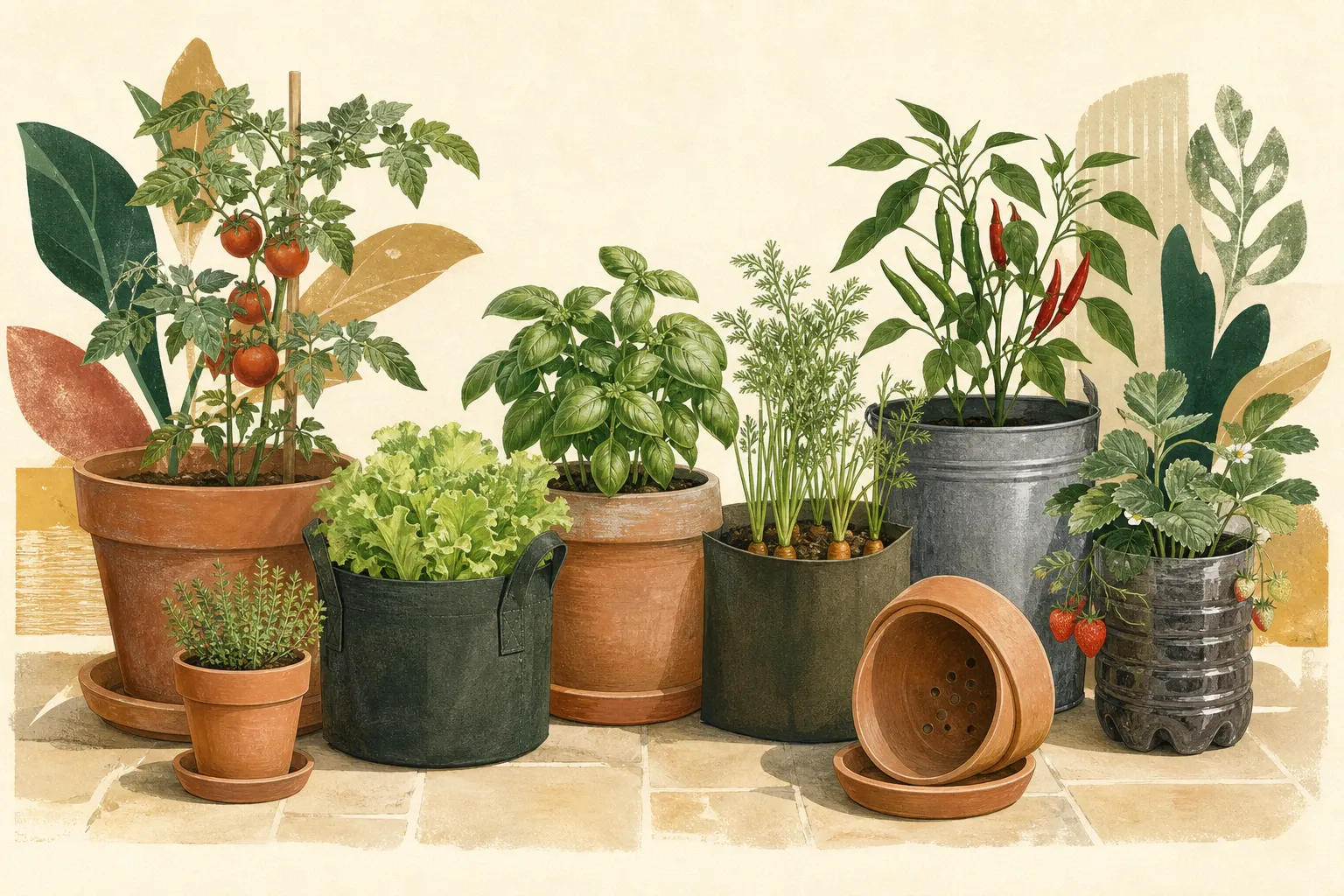
Measure the volume roots can use
External container height is not usable depth. Subtract the base, drainage space, settled growing mix and watering lip, then consider width and total volume.
A crop-page depth is an editorial reference, not a copied container chart. Compare it with the narrowest real dimension and mature plant.
Give excess water a safe route
Drainage openings must remain clear and lead somewhere that can receive runoff. Gravel does not replace a working outlet or suitable growing mix.
Protect the surface without leaving roots in standing water, and follow property or community-garden rules.
Account for wet weight, wind and freeze-thaw
Growing mix, water, crop, supports and ice can create a much greater load than an empty container suggests. Ask a competent person before using a balcony, roof or elevated structure.
A perennial that survives in the ground may lose roots in an exposed container. The planner does not validate overwintering.
Match the whole mature plant
Leave room for leaves, pollination, harvest, inspection and support. One zucchini or pumpkin can need more working area than several shallow leafy crops.
Sources, scope and limits
Sources support the stated context. They do not turn a broad guide into individualized advice or transfer rights to reproduce the original material.
Canada English home food garden editorial synthesis — version 1
Global Garden Planner
Original eight-profile model, planting bands and en-CA corpus. It remains an editorial draft until independent Canadian agronomic review is recorded.
Vegetable container gardening
Gardening at USask, University of Saskatchewan
Supports matching container volume, drainage and growing mix to the crop. Package depth references are original and await Canadian review.
How to water outdoor containers
Gardening at USask, University of Saskatchewan
Supports observing weather, container properties and drainage instead of imposing a fixed watering interval or volume.