Choose the final growing position first
Observe the actual balcony, yard, garden or allotment plot before buying crops. Record when direct sun reaches it, where water leaves, how wind moves and whether every pot or bed is safely reachable.
A bright view or a mild region does not prove that the crop position has enough direct light, warmth or root volume.
Check the boundaries of the site
Confirm tenancy, allotment, planning, fire-access, shared-path, water and local plant-health rules. Never block a drain, exit, inspection point or neighbour’s access.
Use traceable seed or young plants and check current rules before ordering material from outside the relevant UK plant-health area.
Begin with a small comparison
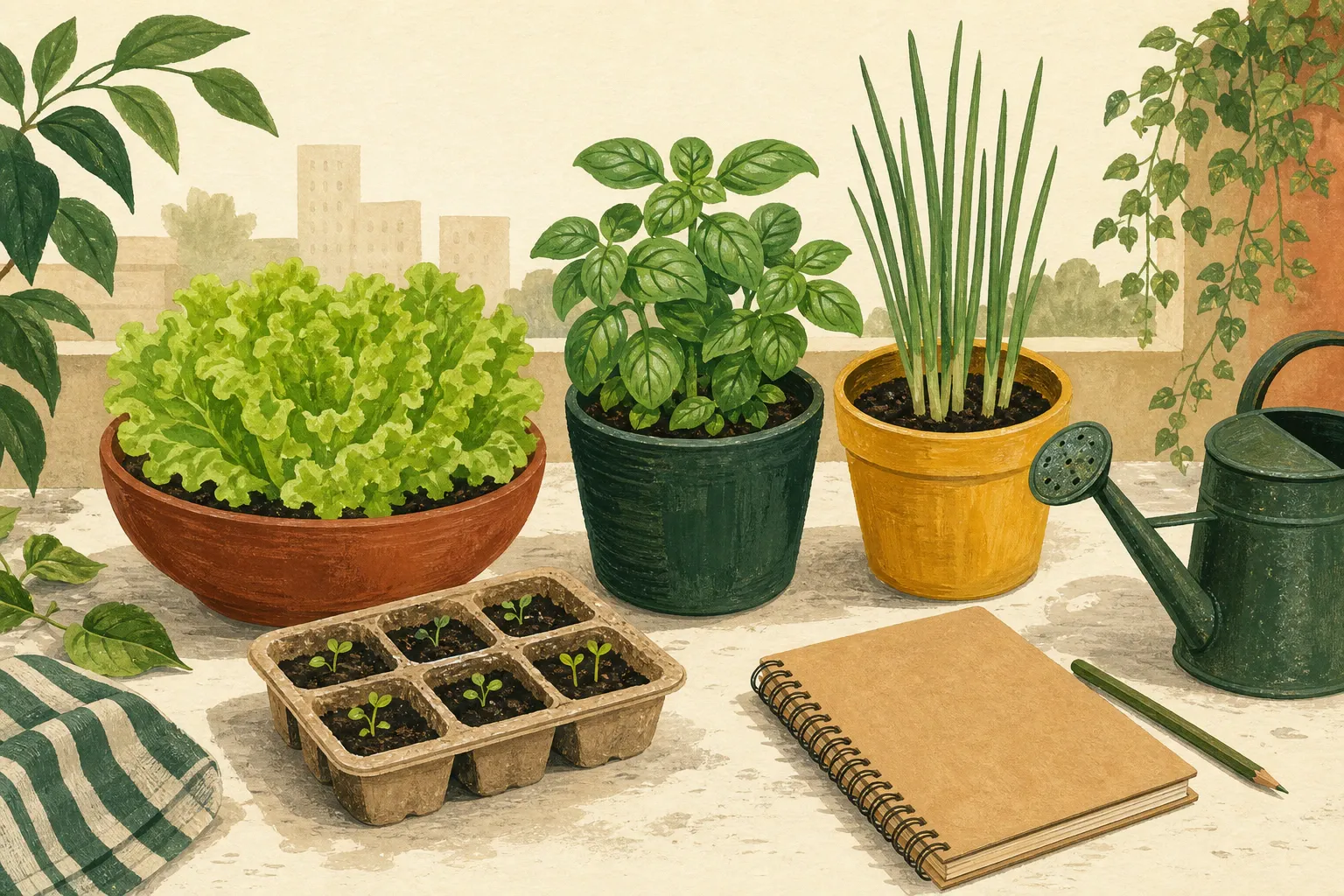
Choose two or three crops that fit the measured light, depth and current season. A leafy crop, herb and one larger crop reveal more than filling every container at once.
Leave working space for mature leaves, canes, wet compost, watering and harvest.
Record what the plot actually does
Note the cultivar, planting date, direct-sun band, root-zone checks, frost, heat, wind and harvest. Use the record to distinguish timing, light, water, support and planting-material problems.
Sources, scope and limits
Sources support the stated context. They do not turn a broad guide into individualized advice or transfer rights to reproduce the original material.
United Kingdom home food garden editorial synthesis — version 1
Global Garden Planner
Original seven-profile model, planting bands and en-GB corpus. It remains an editorial draft until an independent UK agronomic review is recorded.
Positioning vegetables
Royal Horticultural Society
Supports observing sun, shade, shelter and competition at the final growing position.
Planning a vegetable garden
Royal Horticultural Society
Supports considering soil, cultivar and available space. It is not used to create the package calendar bands.