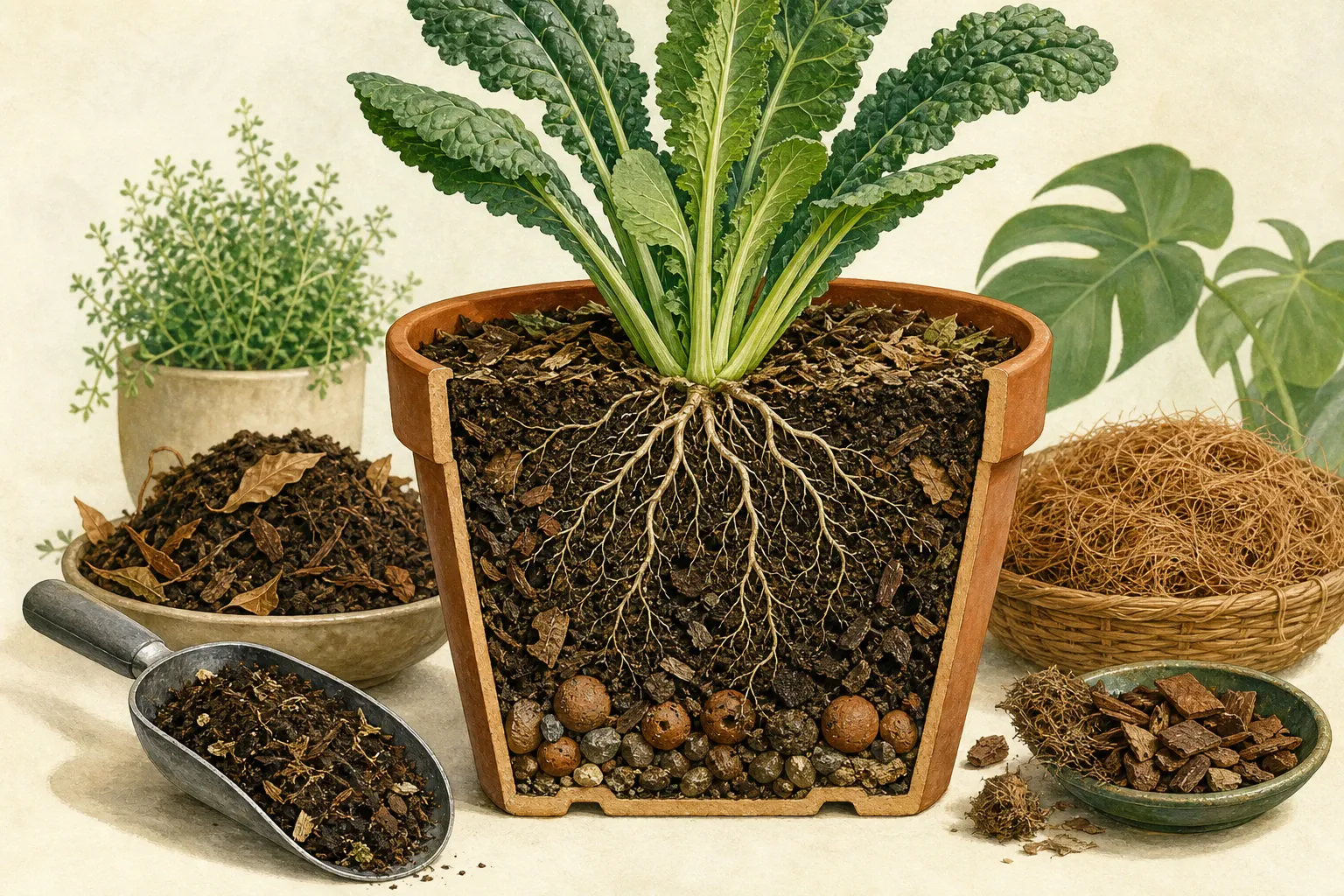
A pot needs a purpose-made root environment
Container material must hold useful moisture while keeping enough air and allowing excess water to leave. Garden soil can compact, become very heavy and drain unpredictably in a pot.
Choose a clearly labelled growing medium suitable for the crop and use, while checking any local advice about peat-free products and amendments.
Protect structure and headspace
Fill without crushing the material. Water to settle it naturally and preserve a watering lip so water can enter rather than running immediately over the edge.
Test the full drainage path
Before planting, add water slowly and confirm that it enters, wets the occupied volume, exits freely and reaches a safe destination. A dry mix can initially repel water; a wet surface can hide a blocked outlet.
Treat reused material as having a history
Record previous crops, disease, treatments and structural decline. Unknown residues, salts, pests or badly compacted material are reasons to stop and seek qualified local guidance before reuse.
Sources, scope and limits
Sources support the stated context. They do not turn a broad guide into individualized advice or transfer rights to reproduce the original material.
United Kingdom home food garden editorial synthesis — version 1
Global Garden Planner
Original seven-profile model, planting bands and en-GB corpus. It remains an editorial draft until an independent UK agronomic review is recorded.
Vegetables in containers
Royal Horticultural Society
Supports matching container dimensions and care to crop size. Package depth references remain original editorial values pending review.
Watering vegetables and fruit
Royal Horticultural Society
Supports checking the root zone, growth stage, soil and weather rather than imposing a fixed watering schedule.