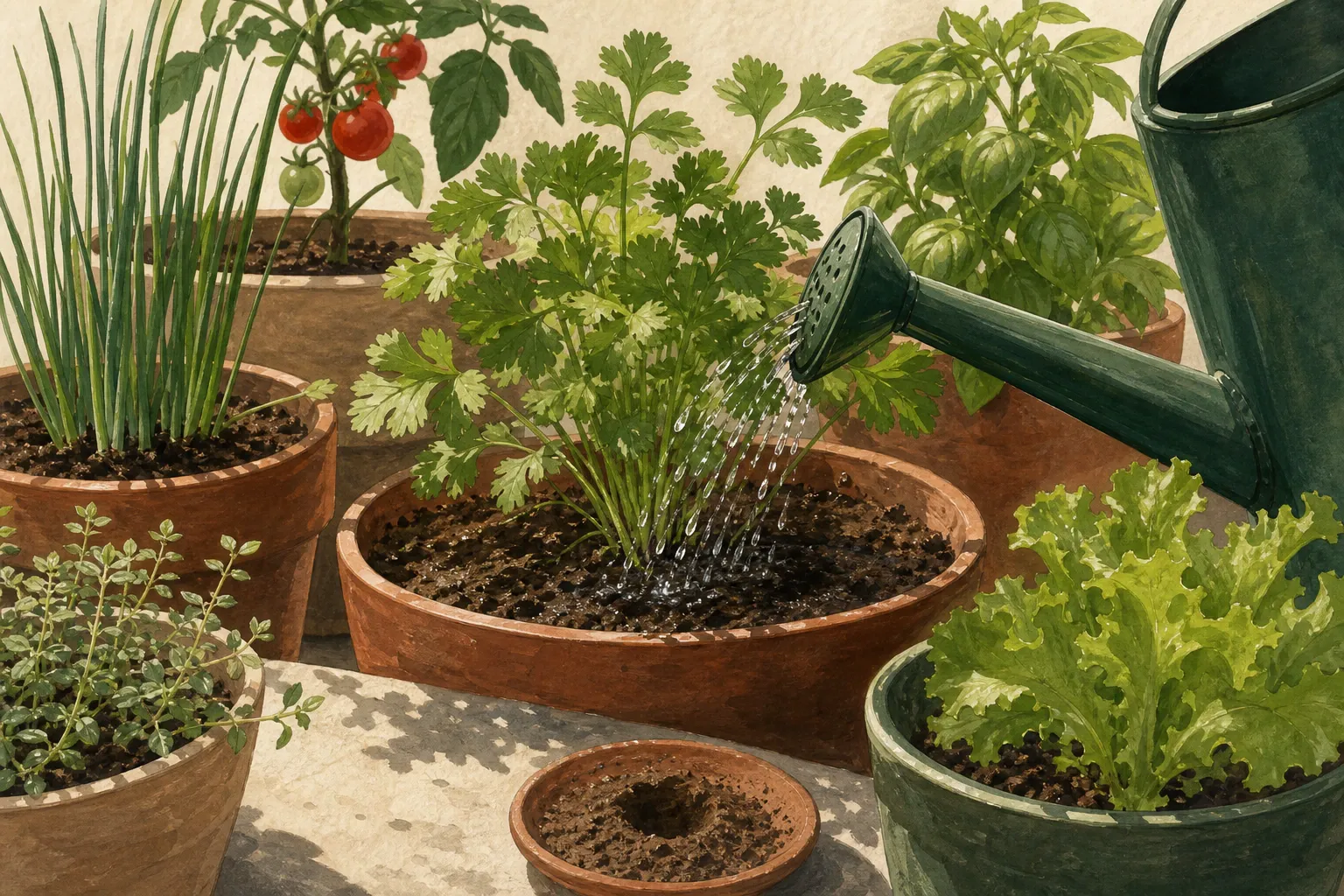
A calendar cannot know today’s demand
Heat, wind, humidity, rain, plant size, root occupancy, container material, and growing mix change water use. “Every day” and “once a week” can both be wrong for the same crop at different stages.
Check more than the surface
Compare moisture below the top layer, container weight where safe, leaf posture, recent weather, and drainage. A dry crust can cover moist mix, while a wet surface can hide dry pockets or saturated roots.
Water the occupied root volume
Apply water slowly enough to enter the mix and distribute it through the root zone. Stop and investigate if water immediately runs down a gap, pools without draining, or leaves only one side wet.
Adapt before a heat or absence event
Move a container only to a safe position with adequate light and drainage. Shade, mulch, grouping, irrigation hardware, or a trusted helper can reduce risk, but every change must be tested before the event.
Follow current local drought and watering restrictions. Efficiency does not override a legal limit or unsafe runoff.
Sources, scope and limits
Sources support the stated context. They do not turn a broad guide into individualized advice or transfer rights to reproduce the original material.
United States home food garden editorial synthesis — version 1
Global Garden Planner
Original seven-profile model and localized corpus. It remains an editorial draft until an independent U.S. agronomic review is recorded.
About WaterSense
United States Environmental Protection Agency
Supports water-efficiency context and checking actual need; it is not used to impose a fixed watering schedule.
Vegetable Gardening
USDA National Agricultural Library
Supports the planning sequence of site selection, soil or mix preparation, planting, maintenance, and harvest, plus referral to Cooperative Extension.