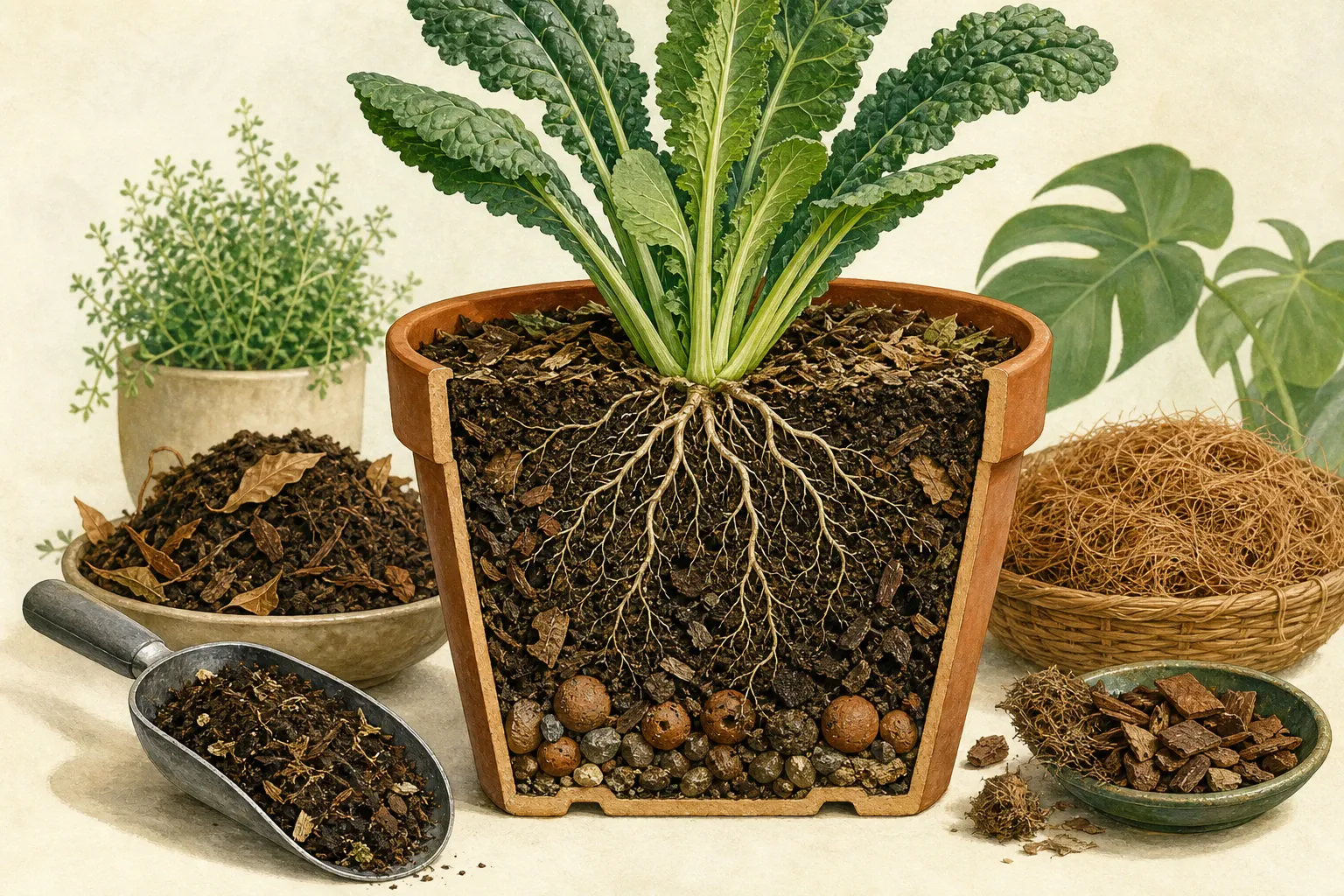
Container mix has a different job from ground soil
A container needs a stable balance of water retention, drainage, and air in a confined volume. Ordinary yard soil can compact, drain unpredictably, and become extremely heavy in a pot.
Use a labeled product suitable for edible container plants or obtain locally qualified guidance for a tested blend.
Protect pore space
Fill without crushing the mix. Water to settle it naturally, then restore the planned headspace. Fine material that washes into outlets or repeated heavy compression reduces air around active roots.
Test the full drainage path
Before planting, add water slowly and confirm that it enters the mix, wets the occupied volume, exits freely, and drains to a safe destination. A dry mix may initially repel water; a saturated mix may hide a blocked outlet.
Treat compost and reused mix as inputs with history
Immature compost, excessive salts, unknown herbicide residues, diseased roots, and contaminated soil can harm a crop. Do not assume homemade or reused material is automatically safe because it is natural.
Record what was grown, any disease, treatments, and how structure changed. Replace or remediate material when its history is uncertain.
Sources, scope and limits
Sources support the stated context. They do not turn a broad guide into individualized advice or transfer rights to reproduce the original material.
United States home food garden editorial synthesis — version 1
Global Garden Planner
Original seven-profile model and localized corpus. It remains an editorial draft until an independent U.S. agronomic review is recorded.
Vegetable Gardening
USDA National Agricultural Library
Supports the planning sequence of site selection, soil or mix preparation, planting, maintenance, and harvest, plus referral to Cooperative Extension.
About WaterSense
United States Environmental Protection Agency
Supports water-efficiency context and checking actual need; it is not used to impose a fixed watering schedule.