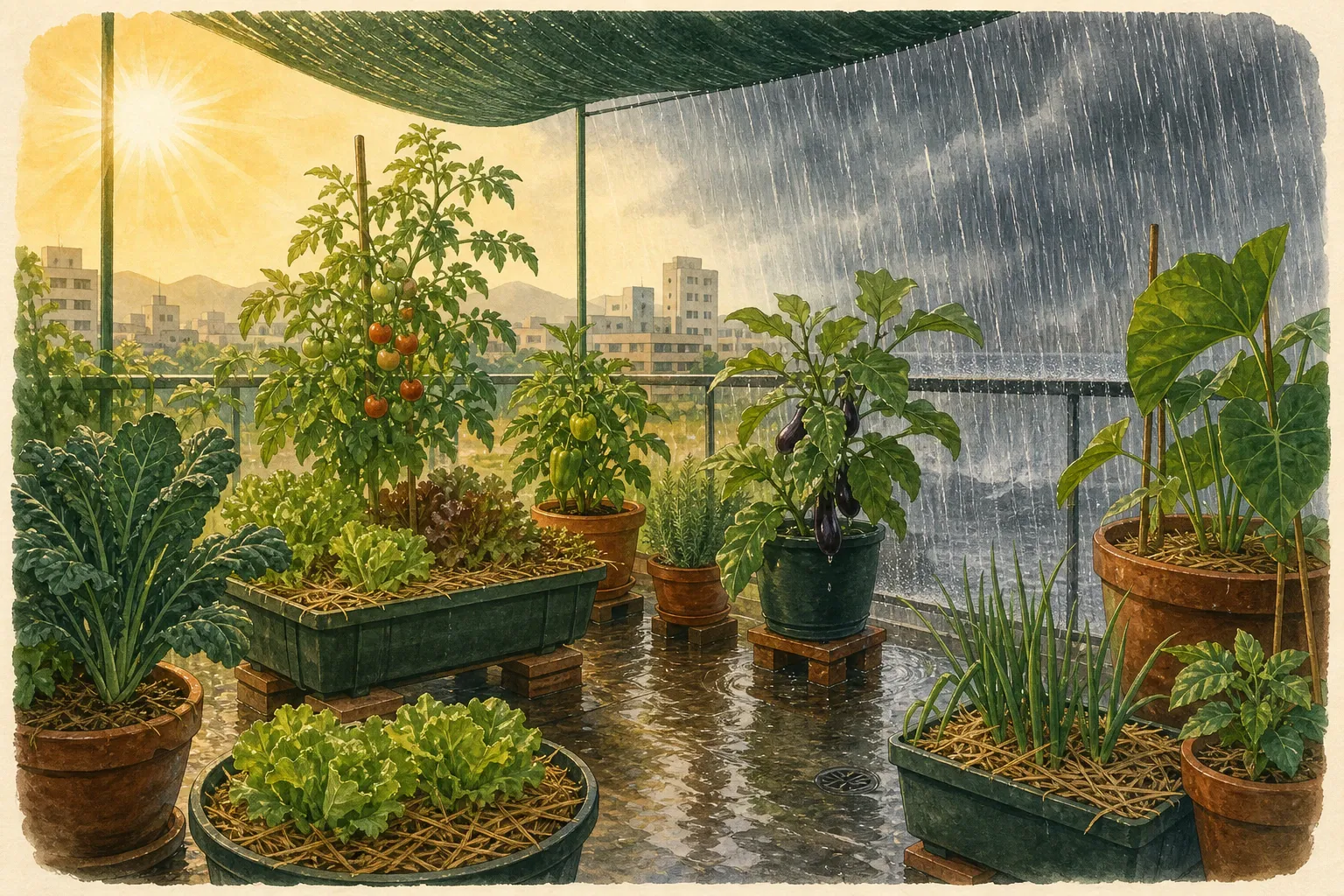
Separate broad climate from the current hazard
A climate profile describes a planning background. Use official forecasts, warnings, evacuation information, air-quality advice, water restrictions, and local emergency instructions for the actual event.
Personal safety comes before moving containers, installing shade, clearing drains, or protecting a crop.
Reduce avoidable heat load
Check small and dark containers, reflected heat, drying wind, and newly transplanted crops first. Temporary shade must be secured, ventilated, and positioned without blocking emergency access.
Do not assume wilt always means dry roots. Check below the surface before adding water to a hot but already saturated container.
Keep heavy rain moving safely
Clear outlets and the downstream path before rain arrives if it is safe to do so. Afterward, check erosion, exposed roots, contaminated splash, standing water, and structural movement before routine watering resumes.
Make wind protection structural
Lower or remove unsafe temporary items before conditions worsen. A trellis, shade panel, hanging pot, or loaded branch can become a hazard when wind catches it.
Do not work outside during dangerous conditions. Replace damaged edible material when contamination or treatment history is uncertain.
Sources, scope and limits
Sources support the stated context. They do not turn a broad guide into individualized advice or transfer rights to reproduce the original material.
United States home food garden editorial synthesis — version 1
Global Garden Planner
Original seven-profile model and localized corpus. It remains an editorial draft until an independent U.S. agronomic review is recorded.
Regional Climate Centers
NOAA National Centers for Environmental Information
Supports directing people to regional and local climate expertise rather than claiming that a national profile resolves a site.
About WaterSense
United States Environmental Protection Agency
Supports water-efficiency context and checking actual need; it is not used to impose a fixed watering schedule.