Hardiness is only one cold reference
The USDA Plant Hardiness Zone Map describes average annual extreme minimum temperature. It does not give a last frost date, first frost date, soil temperature, snow cover, heat accumulation, or a planting calendar.
Annual vegetables also differ from perennial survival questions. Use the crop requirement and current conditions rather than treating a zone number as a universal date.
Map the site’s cold-air behavior
Elevation, slope, valley position, nearby water, buildings, wind, snow, and cold-air drainage can separate neighboring gardens. Record official forecasts and what actually happened at the final growing position.
Work backward from enough warm time
Tomato, pepper, eggplant, squash, cucumber, basil, corn, and sweet potato need both safe establishment and enough warm time afterward. A short-season cultivar can help but cannot remove a hard seasonal limit.
Cool-season crops also have thresholds: saturated cold soil, severe freeze, and very slow growth can still damage them.
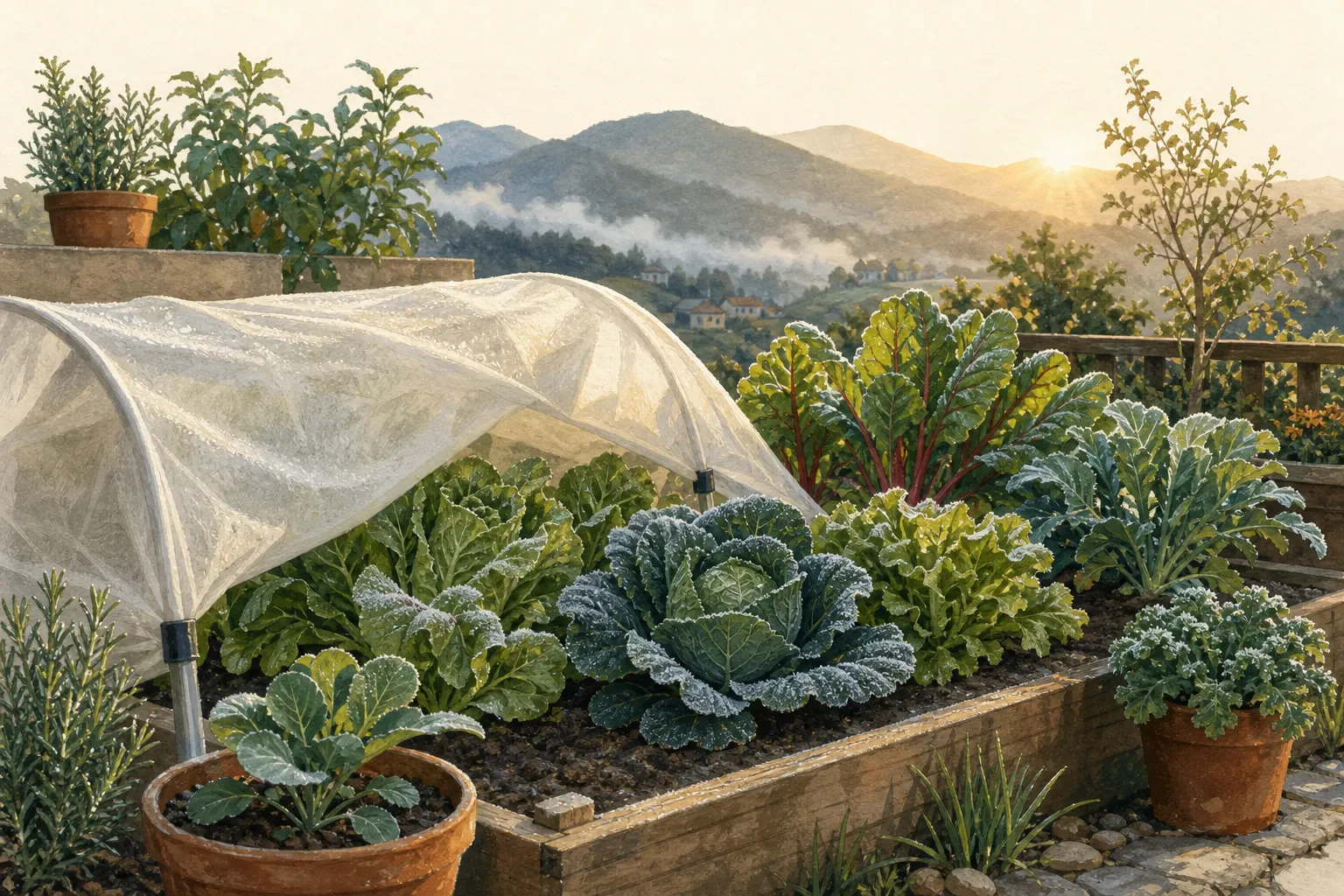
Use temporary protection safely
A cover should not crush foliage, trap dangerous daytime heat, touch a flame or heater, obstruct an exit, or become loose in wind. Vent or remove it when conditions change.
Wait for damage to become clear before heavy pruning after frost. Compare remaining season with cultivar maturity before replacing a crop.
Sources, scope and limits
Sources support the stated context. They do not turn a broad guide into individualized advice or transfer rights to reproduce the original material.
United States home food garden editorial synthesis — version 1
Global Garden Planner
Original seven-profile model and localized corpus. It remains an editorial draft until an independent U.S. agronomic review is recorded.
2023 USDA Plant Hardiness Zone Map — map creation and interpretation
United States Department of Agriculture, Agricultural Research Service
Supports treating average annual extreme minimum temperature as one cold-risk reference, not a complete planting calendar or current forecast.
U.S. Climate Normals
NOAA National Centers for Environmental Information
Supports the use of long-period climate context and the warning that station and regional conditions vary; it does not supply operational month rows.
Regional Climate Centers
NOAA National Centers for Environmental Information
Supports directing people to regional and local climate expertise rather than claiming that a national profile resolves a site.