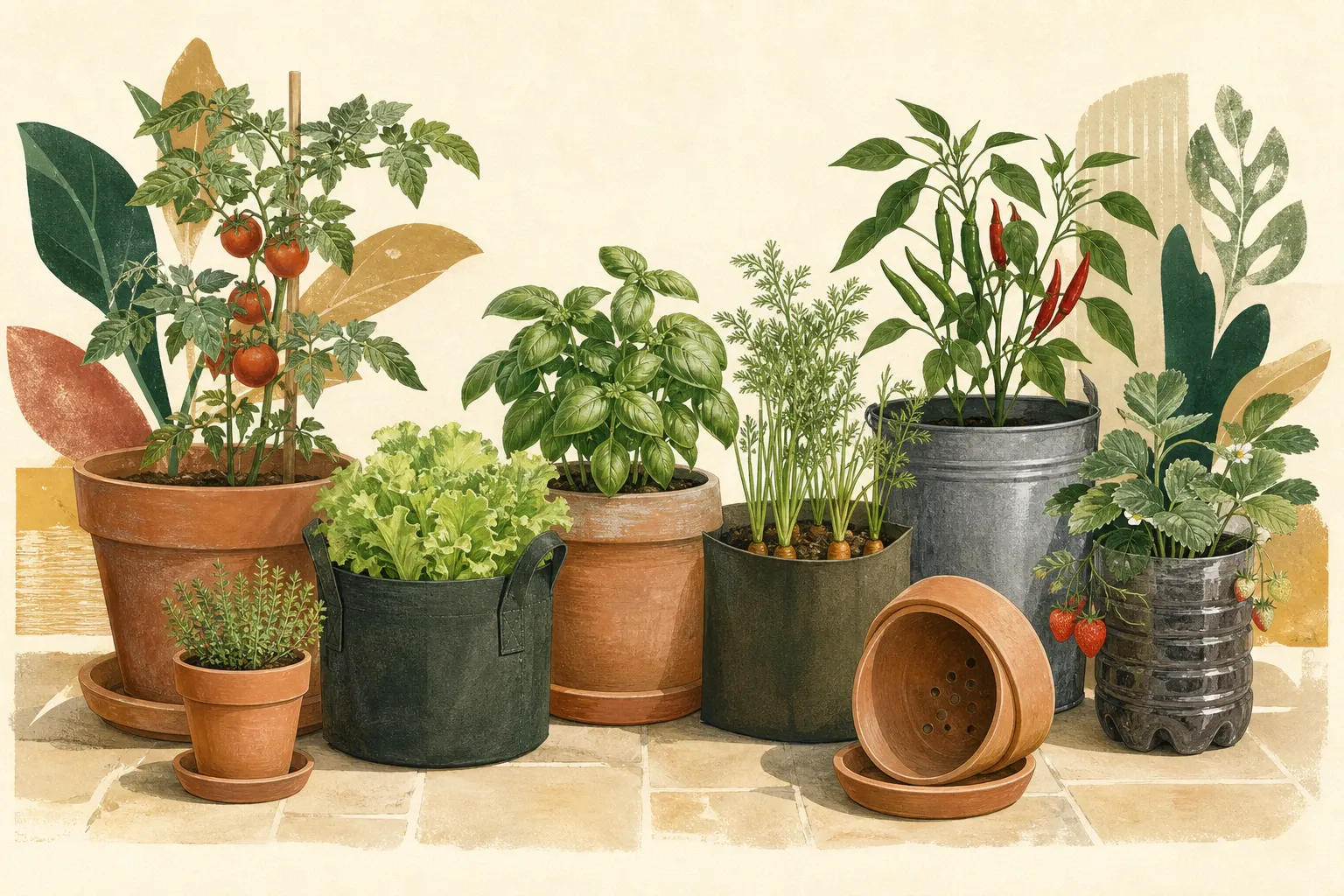
Measure what roots can actually use
External height is not usable depth. Subtract the base, drainage space, settled mix, watering lip, and any false bottom. Width and total volume also matter for large crops.
Compare the crop-page reference with the narrowest usable dimension and leave room for moisture and air rather than packing mix to the rim.
Give water a safe exit
Drainage openings must remain clear and lead somewhere that can receive runoff. A layer of stones does not replace a suitable outlet or structured potting mix.
Protect surfaces without trapping the pot in standing water. Check local rules before allowing runoff from a balcony or shared area.
Treat wet weight and wind as design loads
Large containers become much heavier after watering. Soil, water, crop, stakes, trellis, and a person leaning over the edge can combine into a load that needs competent assessment.
Do not improvise hanging or railing attachments. Secure tall supports without creating a fall, puncture, electrical, or trip hazard.
Match mature size and maintenance
A container must allow leaf spread, pollination, harvest, inspection, and watering access. One vigorous squash or tomato can occupy more working area than several shallow leafy crops.
Sources, scope and limits
Sources support the stated context. They do not turn a broad guide into individualized advice or transfer rights to reproduce the original material.
United States home food garden editorial synthesis — version 1
Global Garden Planner
Original seven-profile model and localized corpus. It remains an editorial draft until an independent U.S. agronomic review is recorded.
Vegetable Gardening
USDA National Agricultural Library
Supports the planning sequence of site selection, soil or mix preparation, planting, maintenance, and harvest, plus referral to Cooperative Extension.
About WaterSense
United States Environmental Protection Agency
Supports water-efficiency context and checking actual need; it is not used to impose a fixed watering schedule.